Espaço José Rentes de Carvalho
Vila Nova de Gaia
A permanent space for a writer, in the city he came from and kept writing about from everywhere else.
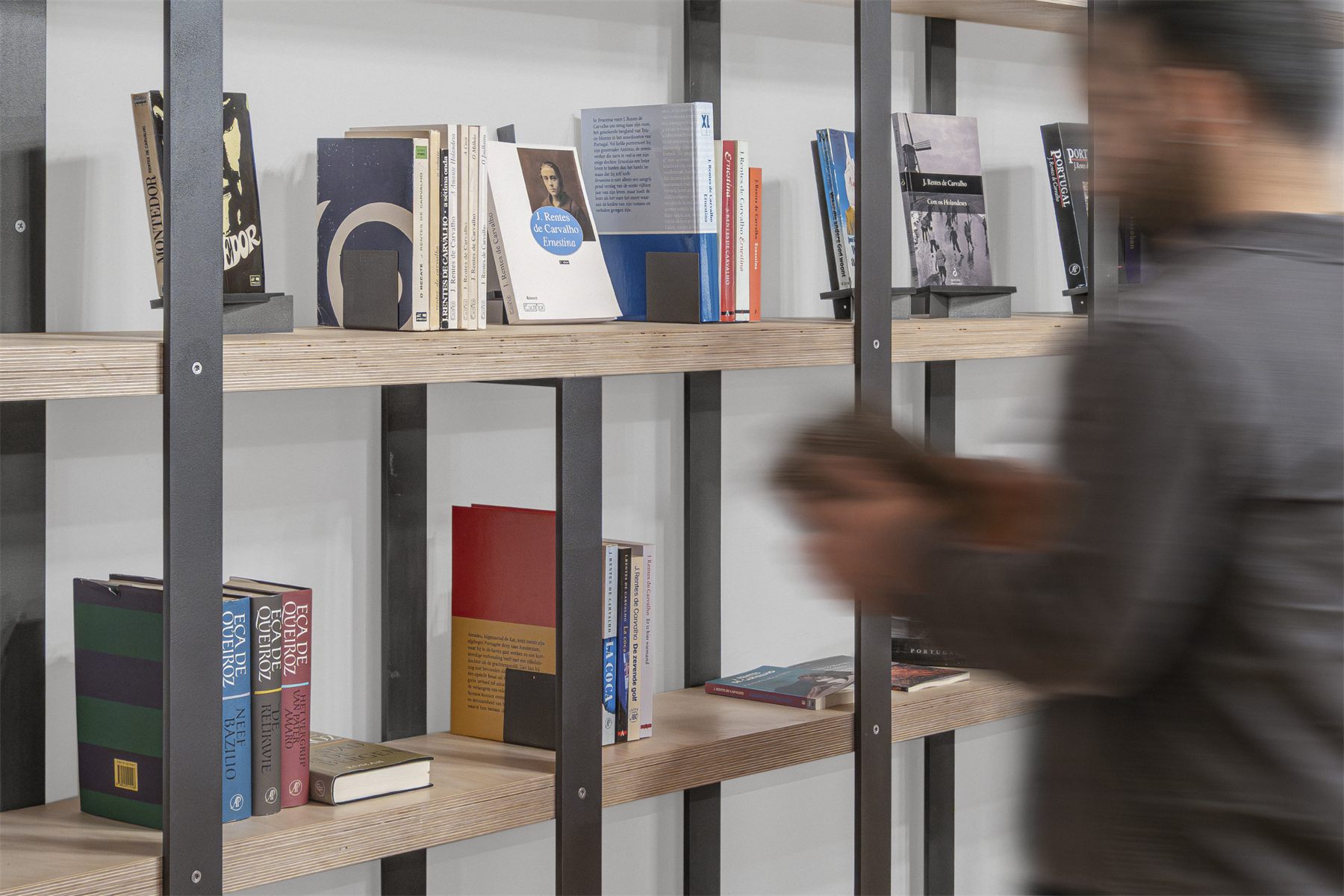
José Rentes de Carvalho was born in Vila Nova de Gaia and built a literary career out of displacement: Portugal, Brazil, Paris, Amsterdam. The work carries both a very local memory and the distance he wrote it from.
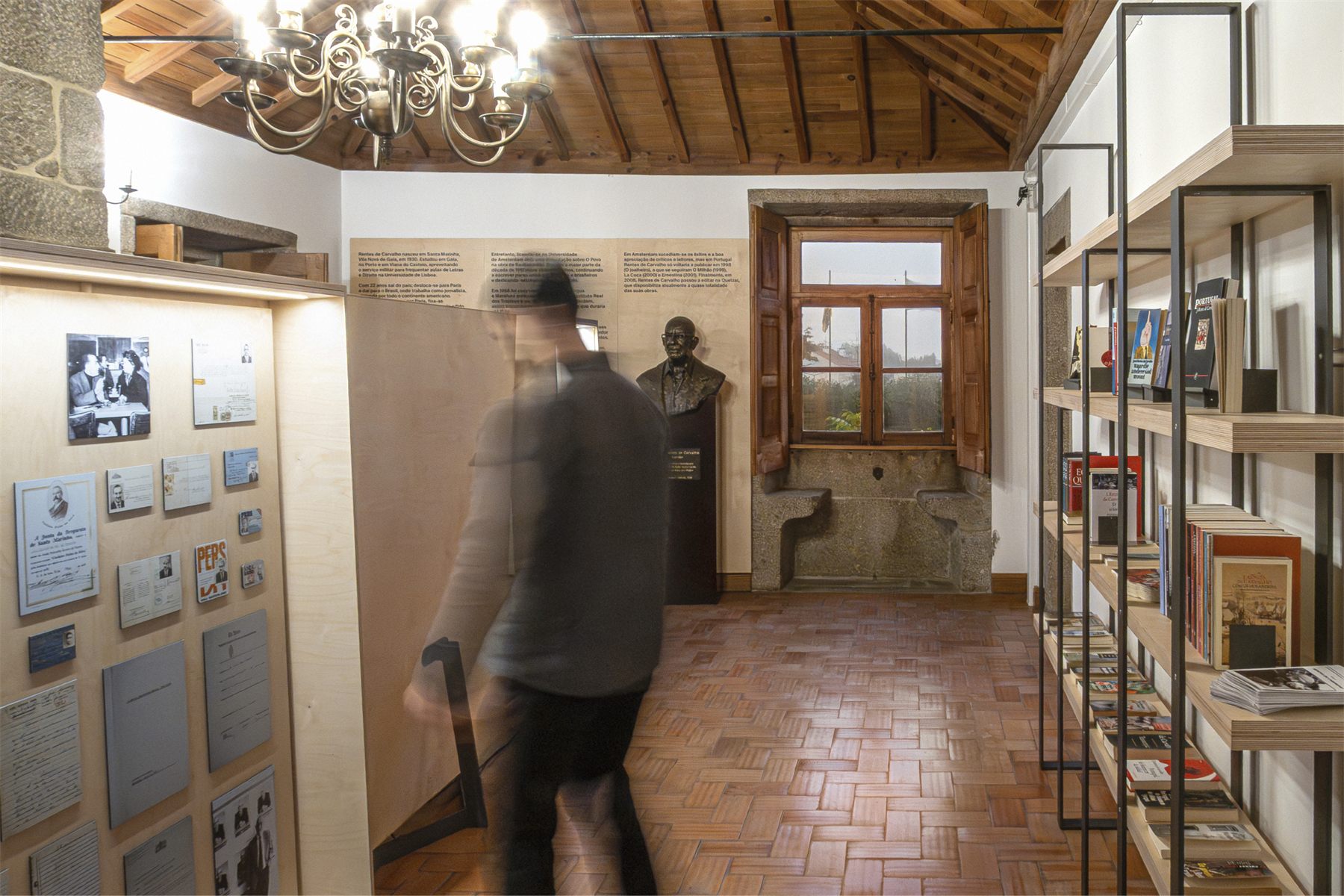
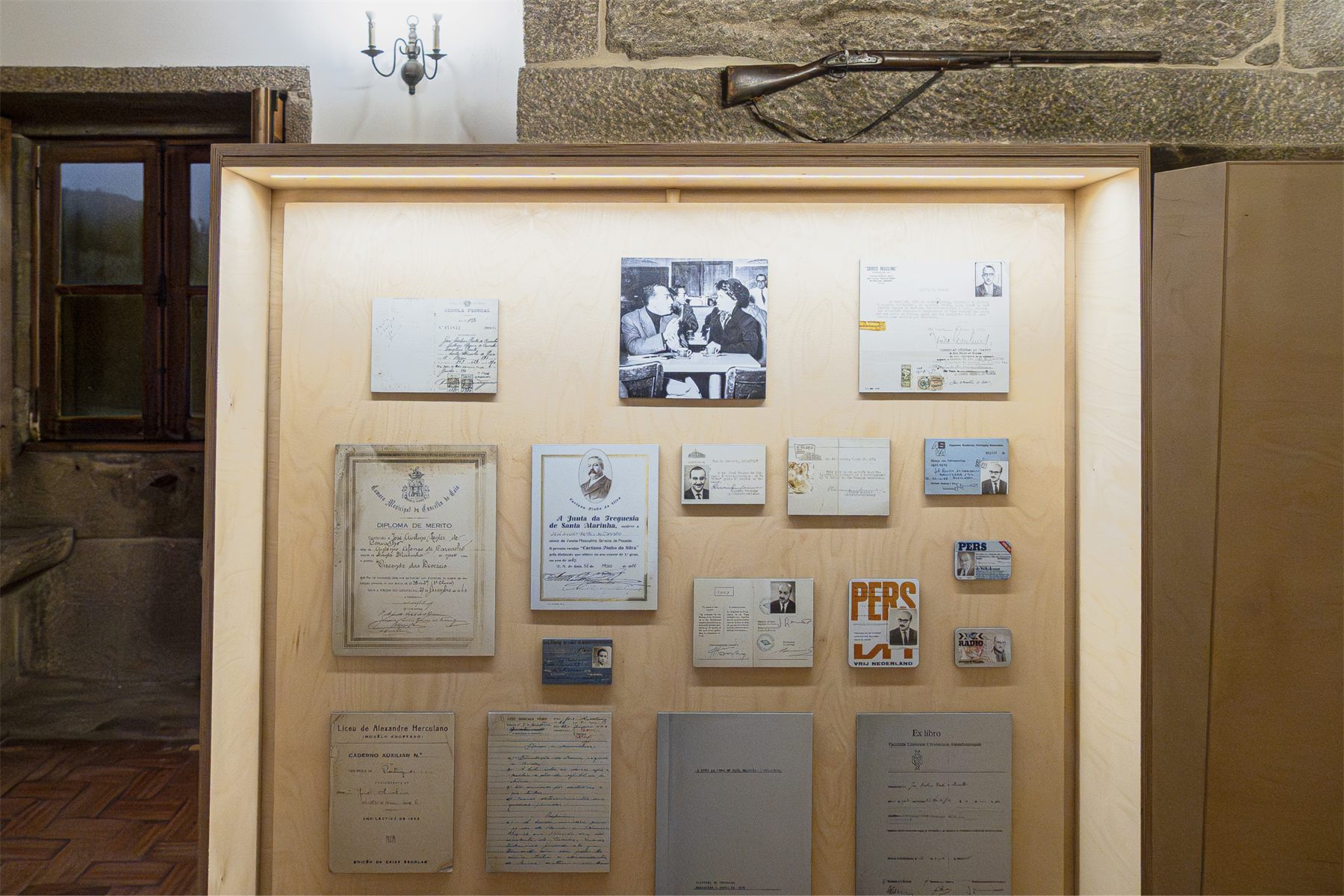
The design started from the content rather than from a plan: manuscripts, books, personal documents and objects. The exhibition elements were developed around what had to be shown, which is what gives the space its sequential order. Typography, scale and composition follow an editorial logic, with large typographic moments and quieter layers of information underneath.
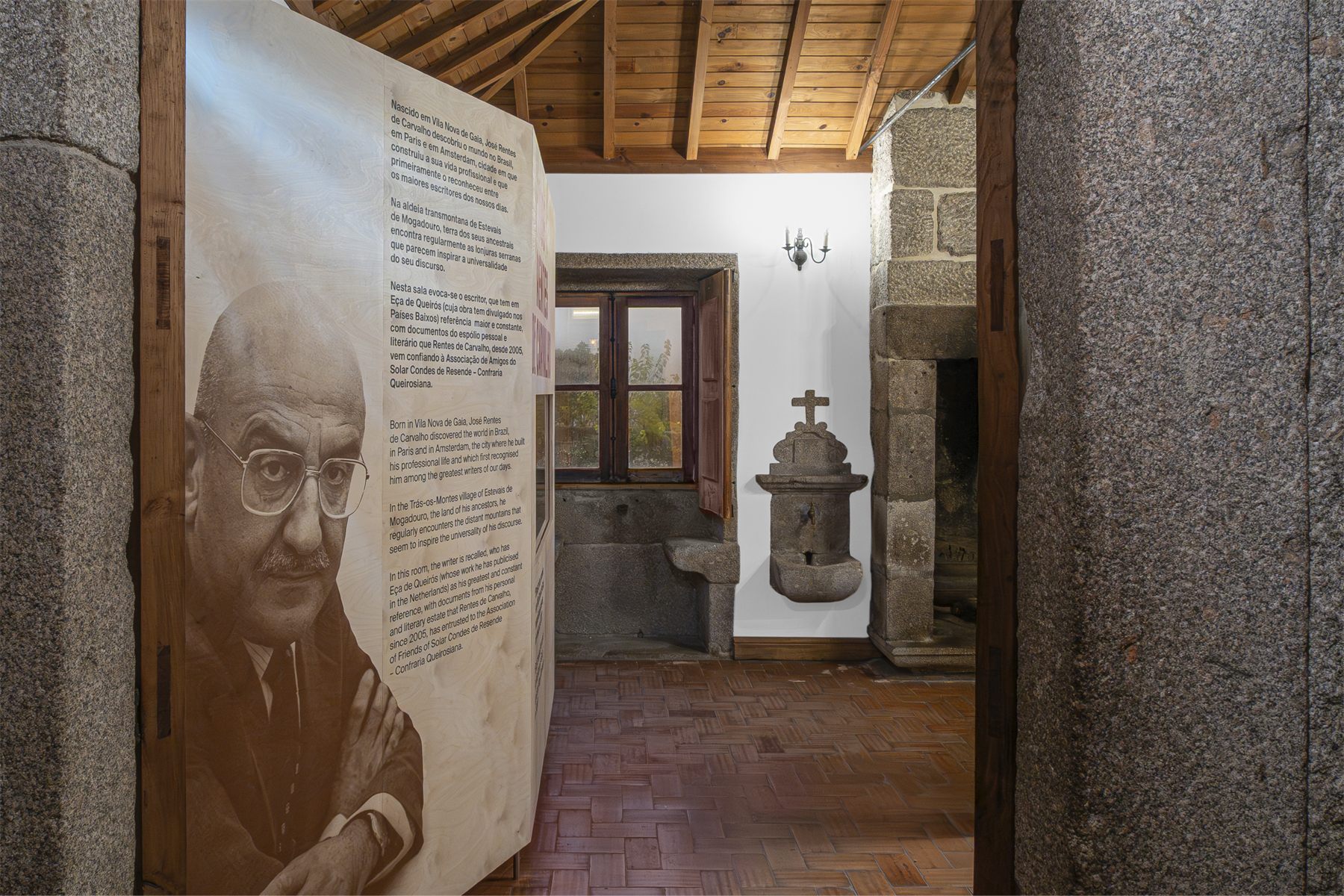
My contribution
I worked across the exhibition equipment as a whole: the shelving, the book supports, the display cases, the vitrines holding the machines, the panelled structures, and the smaller supporting elements distributed through the space.
Each was developed around the specific objects and documents it had to hold, balancing visibility, protection and fit with the rest of the exhibition language. All of it followed the same rule: answer the function, keep a consistent and discreet presence.
Every element was drawn and detailed for production. Two of them are shown here, at opposite ends of the same problem: one made as a family and repeated through the room, one made for a single object and nothing else.
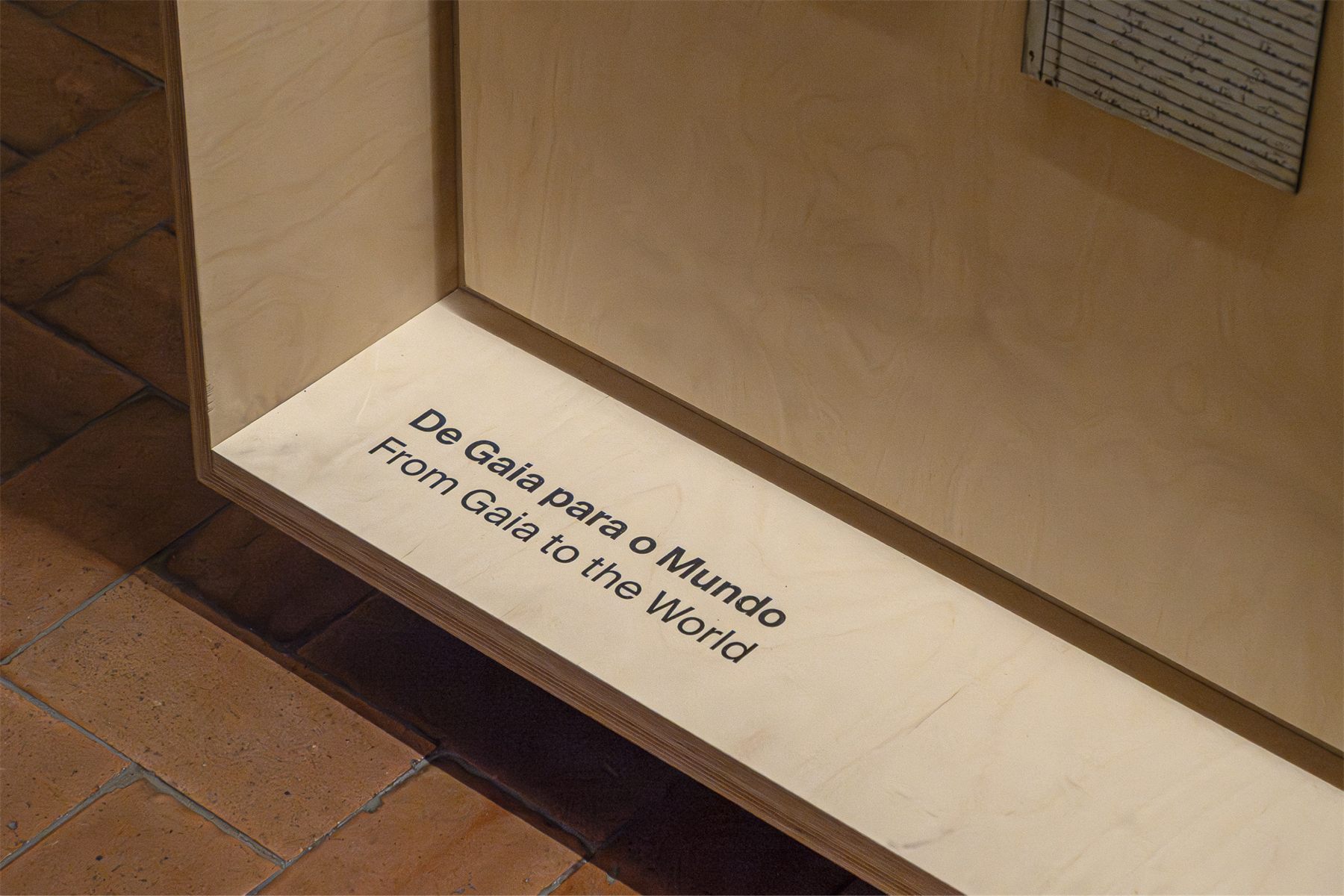
A vitrine that leans
The vitrine is not a box on legs. It leans back off a wedge base, held by a fixed stop from underneath, so the glass reads at an angle and the documents inside face the visitor rather than the ceiling.
This is the glazed one. The rest of the family does not carry glass, which is why this is the type worth taking apart.

Fig. 01Section through the vitrine
Behind the glass is a double panel holding the LED strip, an interior panel that takes the printed graphics, and a technical area for the wiring, all within about 200 mm of depth.
Holding a typewriter
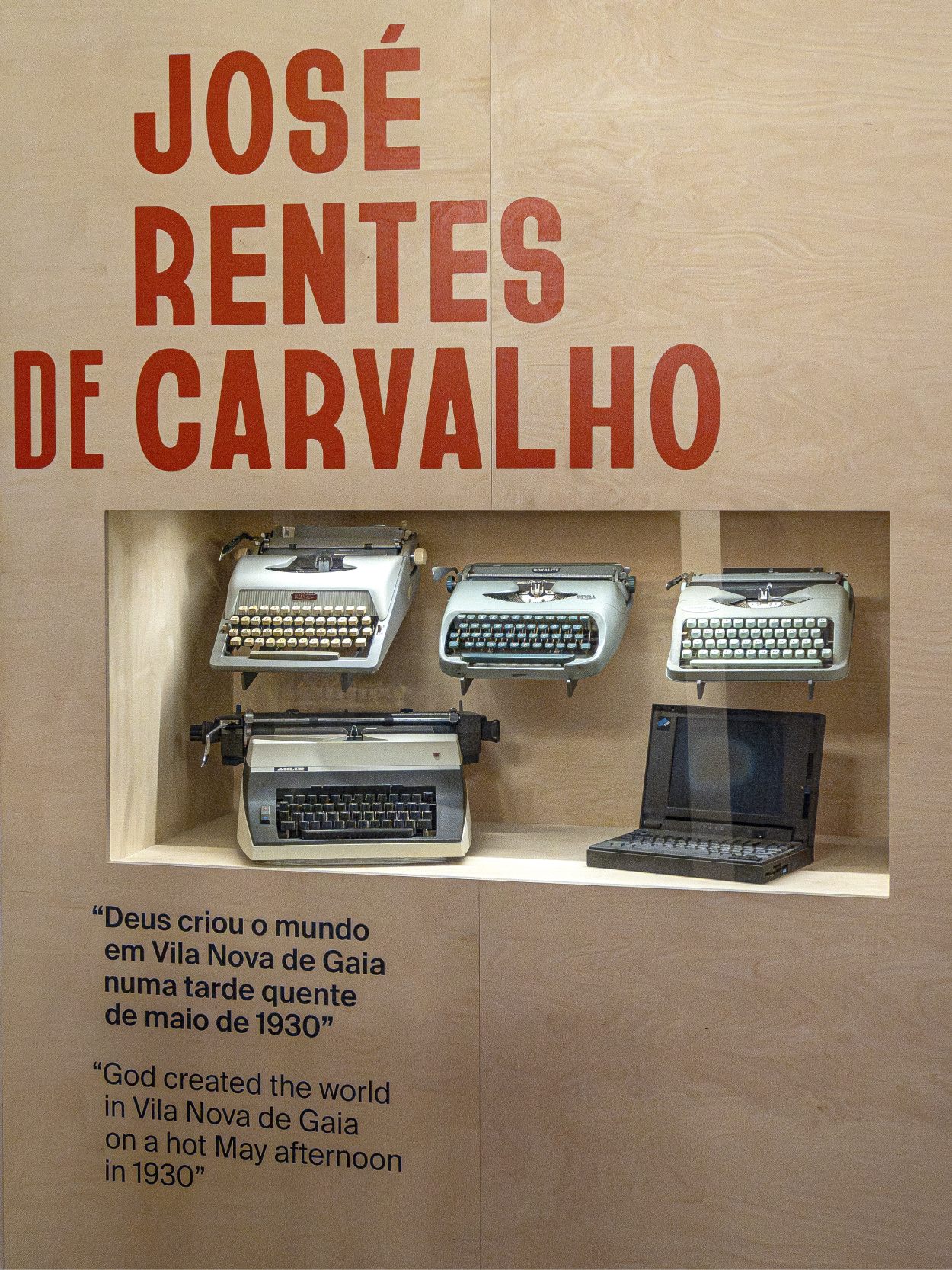
Some of the objects needed something made only for them. The typewriters sit on a pair of 5 mm steel arms, cantilevered off a wall plate at twenty degrees, with nothing underneath them.

Fig. 02Typewriter bracket
The smallest thing in the room, and drawn the same way as everything else in it: the furniture was not chosen and then filled, it was drawn around what it had to carry.
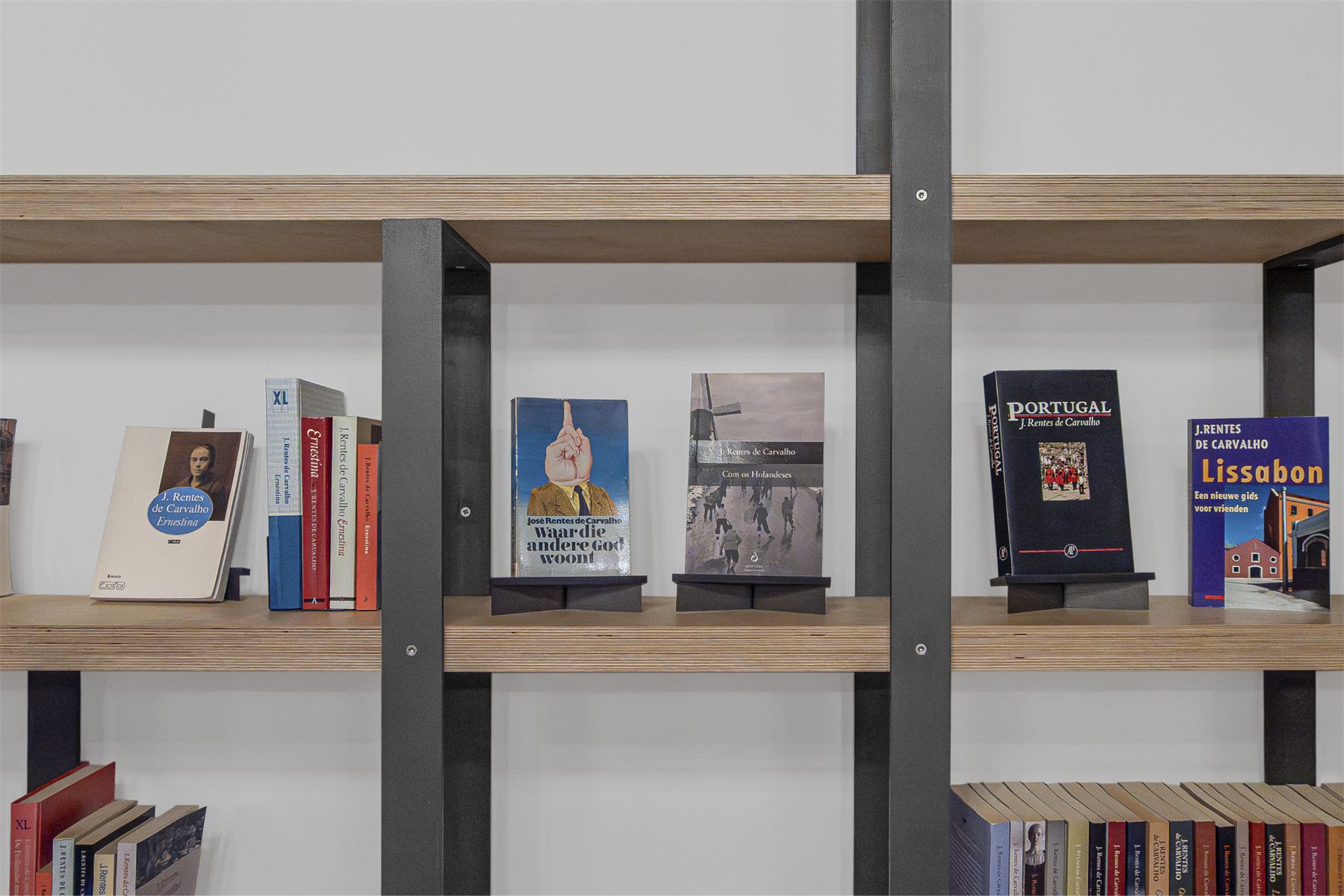
The equipment was designed to support the narrative rather than compete with it, so the manuscripts, the books and the objects stay the thing you are looking at.
Credits
Museography and exhibition design by United By. Exhibition photography by United By.